
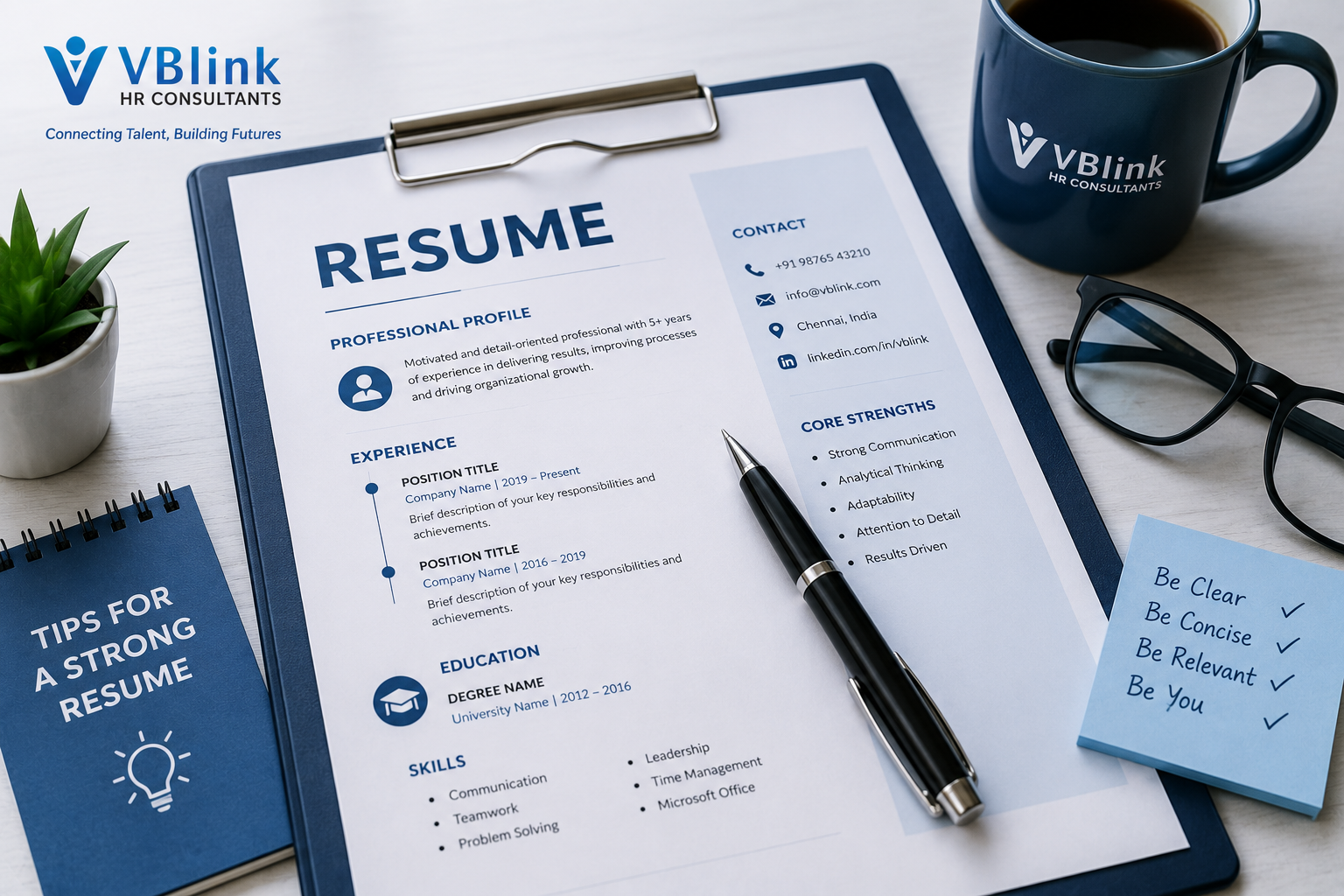
Your resume is often the first impression you make on a recruiter. Within a few seconds, employers decide whether to continue reading or move on to another applicant. A well-written resume clearly communicates your skills, achievements, education, and experience, increasing your chances of getting shortlisted for interviews.
1. Start with a Strong Professional Summary
Begin your resume with a concise professional summary that highlights your experience, key skills, achievements, and career objectives. Tailor this section to match the position you are applying for.
2. Organize Your Work Experience Clearly
List your employment history in reverse chronological order. Include your job title, company name, employment dates, and key responsibilities. Focus on measurable achievements rather than simply listing daily duties.
3. Highlight Your Education and Certifications
Mention your educational qualifications, certifications, professional training, and technical courses that are relevant to the job. Include graduation year and institution where appropriate.
4. Showcase Your Skills
Include both technical and soft skills that match the job description. Examples include communication, leadership, teamwork, problem-solving, project management, programming languages, software proficiency, and industry-specific expertise.
5. Keep Your Resume Clear and Concise
Use a clean layout with consistent fonts, headings, and spacing. Recruiters should be able to quickly locate important information. Avoid lengthy paragraphs and use bullet points wherever possible.
Best Practices for Resume Writing
- Customize your resume for every job application.
- Use action-oriented words to describe achievements.
- Keep your resume between one and two pages.
- Use professional formatting and readable fonts.
- Highlight measurable accomplishments.
- Include relevant certifications and technical skills.
- Proofread carefully for spelling and grammar mistakes.
- Save your resume as a PDF before sending it.
Common Resume Mistakes to Avoid
- Using the same resume for every job application.
- Including unnecessary personal information.
- Writing long paragraphs instead of bullet points.
- Using unprofessional email addresses.
- Adding irrelevant work experience.
- Exaggerating qualifications or achievements.
- Ignoring formatting consistency.
- Submitting resumes without proofreading.
Final Thoughts
A professionally written resume significantly improves your chances of getting noticed by recruiters. Keep your resume clear, concise, relevant, and achievement-focused. Regularly update it with new skills, certifications, and accomplishments so that you are always prepared for your next career opportunity.