
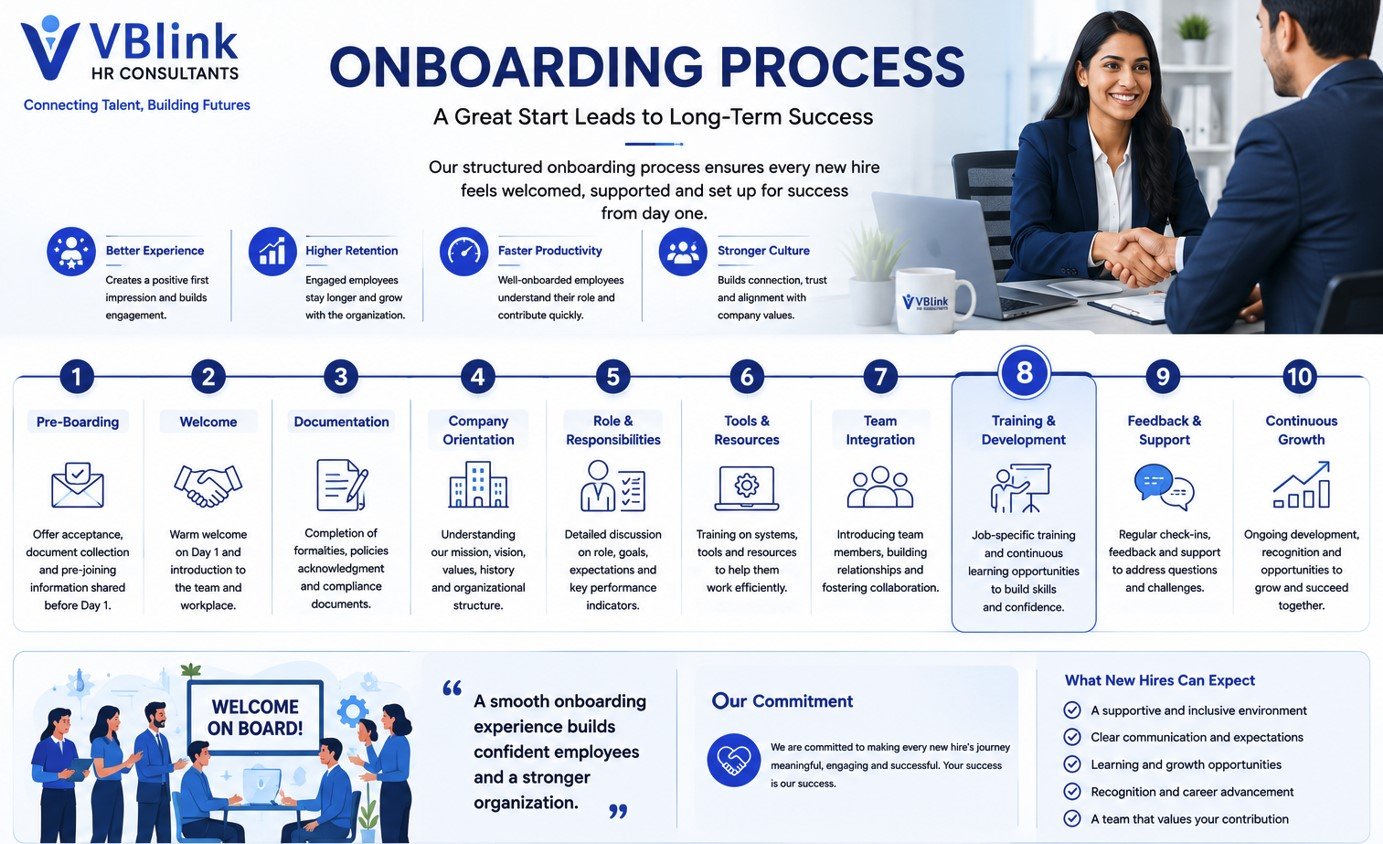
A successful onboarding experience begins long before a new employee starts work. Clear communication, proper preparation, and continuous support during the first three months help new hires feel welcomed, confident, and motivated to contribute.
Why the first 90 days matter
Research consistently shows that employees who receive a structured onboarding experience are more engaged, become productive faster, and are significantly more likely to remain with the organization. The first ninety days are critical for building trust, understanding expectations, and creating a sense of belonging.
Days 0–30: Orient and connect
The first month should focus on helping employees settle into their new environment. Introduce them to the team, explain company values, provide access to tools and systems, assign a mentor, and schedule regular check-ins with their manager.
- Welcome the employee and introduce the team.
- Explain company culture, mission, and values.
- Complete documentation and system access.
- Provide equipment and workplace resources.
- Assign a buddy or mentor.
- Review job expectations and responsibilities.
- Schedule one-to-one meetings with the manager.
Days 31–60: Enable and empower
During the second month, shift the focus towards capability development. Encourage participation in projects, provide role-specific training, collect feedback, and recognize early achievements to build confidence.
- Provide role-specific training.
- Encourage questions and continuous learning.
- Introduce cross-functional teams.
- Offer constructive feedback regularly.
- Review progress against goals.
- Recognize early accomplishments.
Days 61–90: Grow and integrate
By the third month, employees should begin taking ownership of their responsibilities. Continue coaching, discuss career development, encourage independent decision-making, and celebrate important milestones.
- Increase ownership of responsibilities.
- Align long-term performance goals.
- Collect onboarding feedback.
- Celebrate achievements and milestones.
- Support career development planning.
- Create a long-term growth roadmap.
Best onboarding practices
Successful organizations treat onboarding as an ongoing journey rather than a one-day event. Consistent communication, manager involvement, personalized learning plans, and regular feedback create a positive employee experience that improves productivity and retention.
Investing in a structured onboarding checklist benefits both employees and employers. It reduces early turnover, improves engagement, builds stronger workplace relationships, and helps organizations create a positive employer brand.